6 Signs You May Need Repiping
The supply pipes inside your home work constantly — delivering water to every faucet, shower, toilet, and appliance dozens of times a day. Like every component of a home, they have a finite lifespan, and in older Banning neighborhoods where original galvanized steel pipes are still in service, that lifespan is often approaching or past its end. Whole-home repiping is a significant project, but for homes showing the right warning signs, it is one of the most impactful improvements possible for water quality, pressure, and long-term peace of mind.
Sign 1: Rusty or Discolored Water
One of the most visible signs of severely corroded pipes is rust-colored or brown water coming from the hot and cold taps. The orange-brown tinge is iron oxide — rust from the interior walls of corroded galvanized steel pipes. If discolored water occurs only from the hot water tap, the water heater tank may be the source rather than the supply pipes. If both hot and cold taps produce discolored water, the supply pipes are almost certainly the cause. This water is not safe for drinking and indicates a pipe condition that will continue to deteriorate.
Sign 2: Consistently Low Water Pressure Throughout the House
As galvanized steel pipes corrode from the inside, the corrosion deposits — along with mineral scale from Banning's hard water — progressively narrow the interior diameter of the pipe. Think of a pipe that was originally 3/4 inch in diameter: years of internal corrosion and scale can reduce the effective flow area to a fraction of that. The result is chronically reduced water pressure at every fixture in the house. When this is the cause, no amount of pressure regulator adjustment fixes the problem — the pipe diameter itself is what's restricting flow. Repiping with copper or PEX restores full flow capacity.
Sign 3: Frequent Leaks at Multiple Locations
Isolated pipe leaks happen to homes of all ages for various reasons. But when leaks are occurring at multiple locations within a short period — a pinhole leak in the bathroom wall this year, a corroded joint under the kitchen sink, a leak in the laundry room next year — the pipes are showing systemic failure. Repairing individual leaks on pipes that are in this condition is an ongoing battle. Each repair addresses one spot while the rest of the pipe continues to corrode. At some point, whole-home repiping is more cost-effective than a series of patch repairs.
Wondering if your Banning home's pipes need replacing? Call (207) 419-2600 — we'll assess the pipe condition and give you an honest recommendation.
(207) 419-2600Sign 4: Noisy Pipes — Banging, Clanking, or Groaning
Water hammer — the banging sound when a faucet is shut off quickly — can happen in pipes of any age and is usually addressed by installing arrestors or securing loose pipes. However, ongoing groaning, clanking, or vibrating sounds in the walls during normal water flow can indicate pipes that have shifted or lost support due to corrosion weakening the metal. Galvanized pipe joints that have corroded can allow movement that they should prevent. These sounds warrant a professional assessment.
Sign 5: Your Home Has Original Galvanized Pipes
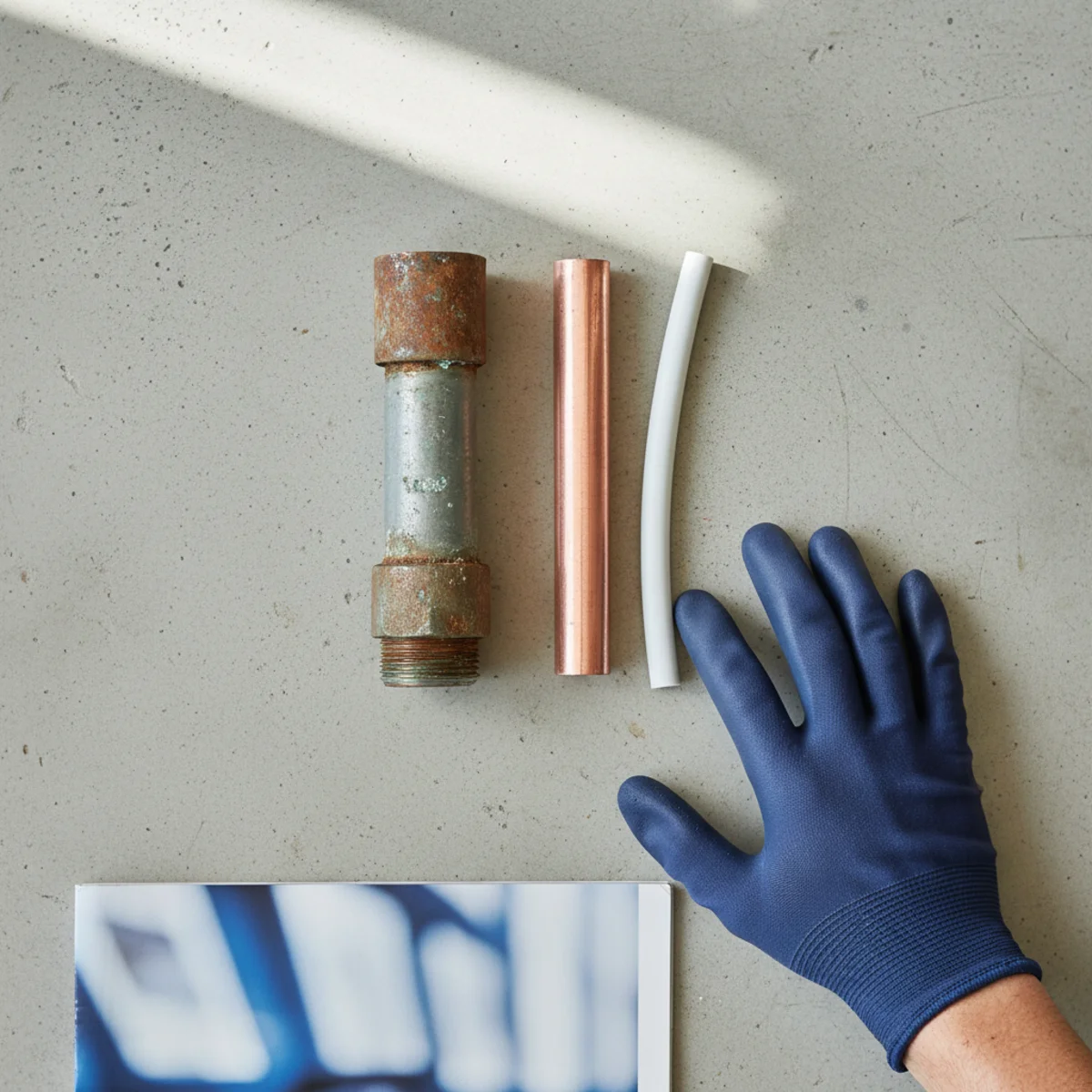
Many Banning homes built before 1975 were plumbed with galvanized steel — steel coated in zinc to resist corrosion. The zinc coating has a lifespan of roughly 40 to 70 years under normal conditions, and considerably less in hard water environments. If your home still has its original galvanized supply lines and was built before approximately 1975, you can assume the zinc coating is depleted and active corrosion is ongoing inside the pipes. Even if no visible symptoms are present yet, repiping within the next several years is a planning decision worth making rather than waiting for a failure.
Sign 6: Blue-Green Staining Around Copper Pipe Connections
Copper pipes were a major improvement over galvanized steel and are used in most Banning homes built from the late 1970s through the 1990s. However, copper can corrode in aggressive water conditions — and hard water with certain mineral balances can be aggressive to copper over time. Blue-green staining around joints and fittings, or at faucet aerators, is a sign of copper corrosion (the blue-green color is copper sulfate). In advanced cases, pinhole leaks develop in the copper walls. When pinhole leaks are occurring at multiple points, partial or full repiping may be the solution.
Repiping Options: Copper vs. PEX
The two main materials used for whole-home repiping today are copper and PEX (cross-linked polyethylene). Copper is a proven long-lasting material that is resistant to permeation by contaminants and can handle high temperatures. PEX is a flexible plastic pipe that is easier to install (reducing labor costs), resistant to freezing and cracking, and less prone to corrosion from hard water. Both materials are appropriate for Banning homes; the right choice depends on your budget, the layout of the home, and local preferences. Our repiping team can walk you through the options with a clear cost comparison.
Call (207) 419-2600 for whole-home repiping assessment and installation in Banning, CA — we make the process as minimally disruptive as possible.
(207) 419-2600
Reviewed by our master plumber
Mike Reyes · Lead Master Plumber & Owner
Master plumber with 20+ years of hands-on experience serving Banning and the San Gorgonio Pass.
More about our team